Thursday, February 27, 2014

My Neighbor Totoro (1988) Review


My Neighbour Totoro is only the 3rd Studio Ghibli film that I’ve watched, after Spirited Away and Laputa: Castle In The Sky. The film’s slow pace and almost non existent plot that reflects its simple lifestyle in the rural japan setting makes it feel like an anomaly (or art film) compared to your typical Hollywood animated films. In fact, it’s not as emotionally powerful as Spirited Away and Laputa. Yet, there’s a good reason why this film is one of the most famous among all Hayao Miyazaki/Studio Ghibli’s work: It introduced one of the most recognizable and beloved cartoon characters in the world - the titular big fat adorable bear-cat like creature - so iconic that it becomes the logo of Studio Ghibli itself; and it is this Totoro that made the film so magical.

The minimalist plot started with university professor Tatsuo Kusakabe and his two daughters, Satsuki and Mei moving into an old house in a rural Japanese village. As they cleaned and bring the house back to good condition, Satsuki and Mei starts to encounter magical creatures around the house; at first it was magical soots that live inside the house that run away whenever the girls approach them. Then it was rabbit-like creatures called Totoro that live near their house. These creatures are only visible to Satsuko and Mei and they appear randomly into their lives as the girls settle into life in village doing simple things like going to school, walking around farms and visiting their mother in hospital.

It’s not wrong to say that despite featuring a giant adorable creature as its main attraction, almost nothing interesting happens in the film. Life-changing, dramatic plot twists and conflicts are largely absent, instead what we see is how beautifully simple life in rural japan is by observing how the girls rebuild the house, enjoy the summer in the open farm, study in school and wait for their father to arrive on the bus. When the girls told the father about the creature, despite of their invisibility to everyone but the girls, the father just show tacit acceptance of their existence without raising any ruckus or questioning the sanity of the girls. Yes, it’s that kind of film where everybody live a simple, happy life most of the time. It can be shockingly boring to audiences, especially those not familiar with Japanese culture or the works of Miyazaki, if not for two things: the trademark top notch animation quality from Miyazaki and the stellar treatment of the titular character. The Japanese farm environment in particular is lovingly rendered to life with its green rice fields and the rolling water streams. But it is the creature animation that give the film so much life and magic, especially the titular Totoro. Totoro is a huge adorable bear-cat like creature with a huge belly and rabbit ear and a face that can switch from a look of dumb innocence to devilish grin in a beat. Totoro is a mysterious creature does not appear frequently in the film and it doesn’t say a word except for a few big groans but its mystery only serves to enhance the immense specialness and magic on the rare occasions when it appears. Whenever Totoro appears, the film suddenly gains a magical life of its own, adding a sense of wonder, innocence and overload of cuteness to the existing zen-like simplicity of the film without it. There are two standout scenes in particular: one when Totoro appears to accompany the girls waiting for the bus and it received an umbrella from Satsuki and started to slowly enjoy the raindrops on the umbrella; the other is when Totoro and its 2 other smaller sibling creatures did ritual dancing with the girls around the small plot of land where the girls planted some nuts at, after which giant trees started sprouting into the sky (reflecting Miyazaki’s pet environmental themes like in Laputa). It is credit to Miyazaki’s creation and animation of Totoro as well as Joe Hisaishi’s soothing score that brings magic to Totoro’s scenes. It is these scenes that made this otherwise mundane film worth watching and the titular creature so memorable that it will likely outlast the film itself.

My Neighbor Totoro (となりのトトロ Tonari no Totoro)
Written/Directed by Hayao Miyazaki

Rating: 3.5 out of 5

Friday, June 21, 2013

Iron Man 3 Review


Since the first Iron Man in 2008, Marvel Studios has been churning out almost annually interconnected superhero films based on their property that culminated in the groundbreaking success of The Avengers last year. It's no brainer for them to continue this journey with a direct sequel to their most popular superhero. But instead of expanding the universe of past Marvel films further, it's interesting to see Iron Man 3 taking a counterintuitive approach by focusing solely on the character instead. Perhaps it's to address the criticisms of Iron Man 2 or just a shrewd move to bring the character back to basics after all the epic adventures. But while Marvel certainly has the right intent, the film unfortunately suffers from some questionable choices, same script problems that plagued Iron Man 2, and a leading man who look tired of his starring role - all of which is ultimately the result of Marvel's assembly line filmmaking process that with strict deadlines that leaves little room for development and talent retention that better superhero films usually have. As expectations get higher film by film and peaked with The Avengers, Iron Man 3's failings should warn Marvel to have a less rushed development process.

Some time has passed since the events of The Avengers, Tony Stark (Robert Downey Jr) has been suffering from unknown anxiety issues caused by the final battle in New York and he spends most of his time in his private mansion tinkering and upgrading his Iron Man suits, much to the dismay of his girlfriend/CEO Pepper Potts (Gwyneth Paltrow). While Tony hides from the spotlight, a mysterious terrorist mastermind known as The Mandarin (Ben Kingsley) has appeared in public and started a campaign of terror against the United States government by executing mysteriously large and deadly explosions worldwide. When one explosion nearly killed Tony's former bodyguard Happy Hogan (Jon Favreau, returning only in acting capacity), Tony decides to come out and publicly challenge him. He is then visited by a former lover and brilliant scientist Maya Hansen (Rebecca Hall) who tried to tell him about a powerful serum called Extremis: which can turn its host into nearly invincible superhuman being with the ability of overheating or burning everything they touch; and that her boss Aldrich Killian (Guy Pearce) has been working with The Mandarin. Unfortunately, before Maya could reveal all these, Tony's mansion are suddenly attacked by The Mandarin's forces which destroyed almost all his Iron Man suits. Left with a barely functioning prototype suit and lost somewhere far from home after barely escaping the attack, Tony has to rebuild himself again in order to investigate the conspiracy behind The Mandarin and Killian and stop them from bringing down the country.

The biggest problem for Iron Man to overcome since day one has been how to get the audience to side with a protagonist who's essentially an unlikeable individual who can solve any problem too easily with unparalleled wealth and genius (but mostly with his metal suit). The past films have dealt with it, with varying success, by a mixture of surrounding Tony with bigger obstacles or equally unlikable rivals (his company boss, government, Justin Hammer) and turn him to rock star who sticks it to the system, or showing that Tony has a good, sensitive soul beneath the showman when disaster strikes, or relying on the charms of Robert Downey Jr when all else fails. This time, the film did a good job of bringing Tony to rock bottom and have him start again from zero, from the silent, somber opening scene of Iron Man suits destruction to his near death escape. Unlike the first film, sadly, Tony doesn't undergo a redeeming character transformation and instead remains his usual obnoxious, narcissistic self as he and the film focus more on solving the plot instead; which is bad news because the script has serious problems that destroy whatever goodwill the downfall of Tony has built. The script is filled with huge plot holes, poorly organized subplots, simply unbelievable, inconsistent things such as villains that appear invincible in many scenes but get destroyed easily in the next and a major character that gets a shocking plot development that gets too easily solved later. Finally, just to show how far the story has strayed from redeeming Tony,  Tony made many Iron Man suits that can operate autonomously and be remote controlled by him, therefore enabling him to do battle out of harm's way and these suits do the final battle for him which ironically doesn't help his character growth at all.


These are script problems that can be fixed by having more development time which doesn't exist due to Marvel's strict release schedules that leave little time for development and discouraging talents to stick around - between 3 Iron Man films and The Avengers, there's already 8 different credited writers who have handled the character, compared to all Chris Nolan's Batman films which has always had the same writers. It doesn't matter if they can hire good talents every film if they can't keep it consistent. Speaking of talent, hiring Shane Black as writer/director seems like an inspired choice because he's famous for having written the best action films (Lethal Weapon) and having an irreverent dark sense of humor - something that wouldn't be out of place with Tony; on the other hand, he's also has never shown interest in redeemable characters and oddly more obnoxious Tony is partially his fault and his action directing skill does not live up to his action script reputation and the final battle disappoint - it's a battle scene that has become sadly too standard in blockbusters now where the fighters have a go at each other but nobody knows what's happening or care. The final disappointment is with Robert Downey Jr himself, it seems that these past few years of only portraying Tony Stark and Sherlock Holmes have given him franchise fatigue and he looks to be on autopilot here, giving Tony the requisite obnoxious asshole quality but without the likability.

It's such a shame that the film fail in its focused approach to humanize Tony Stark especially when exploring the bigger universe approach could have made the film more enjoyable. A post-Avengers Marvel cinematic universe offers some intriguing questions and promises such as what does it mean to the world that has gone through an alien attack and defended by superheroes who no longer need to hide now? What does it mean to be normal in a post-Avengers world? When the superhuman Extremis soldiers were revealed without eliciting much surprise by other characters, I am thrilled by the implication that the extraordinary has now become to be expected by the people occupying that universe and perhaps the film will head to this direction. Alas, just like it drops the ball on humanizing Tony, the film doesn't even realize this potential. This is reflected in the treatment of Mandarin - the villain whose significance in comic book is like The  Joker to Iron Man's Batman. He's a difficult villain to portray because of his oriental sterotype look and mystical power and was understandably absent in the last films, but a post-Avengers world offer a possibility of a creative and fulfilling interpretation of The Mandarin but sadly his incarnation here is simply shameful. In fact, further references to The Avengers or its bigger universe are either lamely dismissed or treated by contempt by Tony (and Jim Rhodes in a scene) throughout the movie. Even the now expected post-credits scene is more of a joke than another continuing attempt at a bigger journey. This make the film so disheartening because even when it fails there's nothing else to geek about.

At the end of the day, the Iron Man 3's failure has to serve as a wakeup call to Marvel on how to treat their property. Their past disciplined, factory approach may have paid off with the success of The Avengers, but Iron Man 3 has shown that the rushed approach doesn't always produce good movies. In The Avengers, Steve Rogers asked Tony Stark who he is if he takes away the suit and armor. Marvel's gotta ask the same question to their superhero movies too: are they properties that deserve the best treatment possible or just a moneymaking machine like this film.


Rating: 1.5 out of 5

Iron Man 3

Directed by Shane Black
Written by Drew Pearce & Shane Black
Produced by Kevin Feige
Cast: Robert Downey Jr, Gwyneth Paltrow, Don Cheadle, Guy Pearce, Ben Kingsley, Rebecca Hall, James Badge Dale, Jon Favreau.

Saturday, March 23, 2013

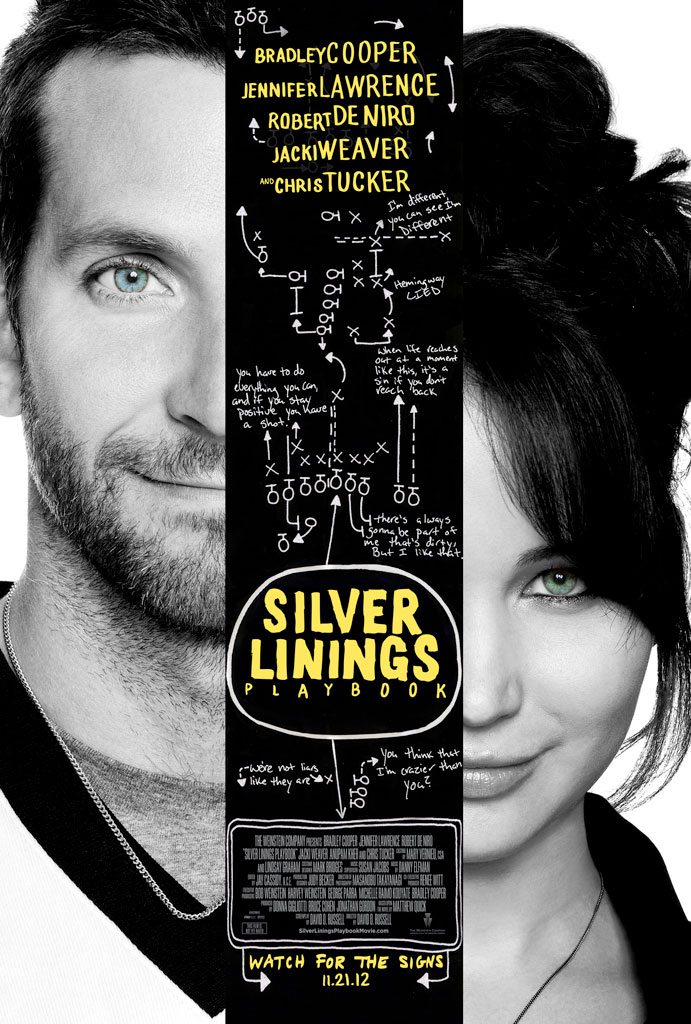
Silver Linings Playbook review


There's some thematic spoilers below. Consider yourself warned.

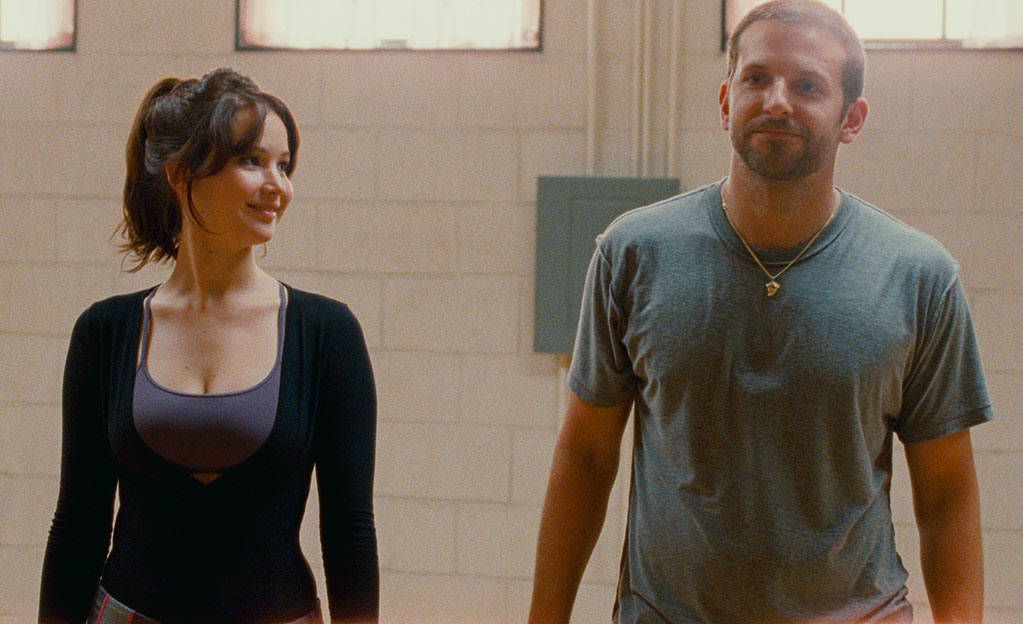
Who would have known that David O'Russell, better known for making films with dark edges, could make such a great romantic comedy. Granted, calling Silver Linings Playbook a romantic comedy is perhaps a broad misnomer given that the film deals with characters suffering from mental illness and doesn't treat them lightly. But it's rare to see a movie that make you root for the main characters to be together these days, something that many mainstream hollywood romantic comedy just simply doesn't even try to anymore. Perhaps this is due to the flawless chemistry between leads Bradley Cooper and Jennifer Lawrence and/or the excellent script that keeps everything mostly grounded in somber reality but the romance and laughter in this film is truly heartfelt and which makes this the best hollywood romantic comedy since, in my opinion, "Definitely, Maybe".

Pat Solitano Jr (Bradley Cooper) just got released early from a mental institution. He was originally committed due to a violent assault on his ex-wife's lover - triggered by bipolar disorder - upon the discovery of their affair. Pat's newfound overly focused, optimistic and no bullshit attitude to combat his bipolar disorder can hardly disguise the fact that he's trying to get his ex-wife back. It was an impossible, thankless task because she has filed a restraining order against him and nearly everyone he knows including his friends, doctor and parents (Robert De Niro and Jacki Weaver) don't support him and would prefer him to move on. Undeterred, Pat seeks the help of Tiffany (Jennifer Lawrence), a friend's sister in-law who's still in touch with his ex-wife. Tiffany also happens to have her own mental issues: since her husband's death she's been sleeping with as many people as possible. After a serendipitious first meeting in which both exchanged witty spars over mental drugs and each other's mental problems, they made a deal where Tiffany would deliver Pat's letter to his ex-wife in exchange with Pat becoming her dance partner in an upcoming dance competition. While both are working to keep their end of bargain, they would have to face some unanswered questions: will Tiffany admit that Pat is the first real love she had since her husband's death and the whole dance training is just an excuse to spend more time with him? Will Pat realize that beneath the focused determination to get his ex-wife back, he too has developed  feelings for Tiffany? Will the struggle with their respective mental problems greatly hinder their goals and even prevent them from admitting their feelings to each other? Meanwhile, Pat Sr, who has an unhealthy fan worship of the local Philadelphia Eagles himself, wonders why his son is not spending more time with him to watch the Eagles on TV together.


Silver Linings works so well because David O'Russell script (based on the novel by Matthew Quick) is smart and balanced enough to know when to be funny and romantic while everything else is grounded at dark, hard reality. Because of this, we can both laugh with the protagonists without losing empathy and respect for them. This is particularly shown by how Pat braves his mental disorder with spirited snark and disbelief and the aforementioned first meeting scene where Pat and Tiffany verbally spar over who's crazier. What the script does even better is to elevate the romance by developing their relationship naturally in a gradual, believable manner. While Pat's romantic trajectory is typical of a character who's in denial of his feelings to the match until it's too late; it's Tiffany's romantic trajectory that's interesting and truly brings life the romance because it is strongly tied to her recovery from her problems. After their first meeting, Tiffany casually offered to sleep with Pat as she always did to other people but his unexpected rejection forced her to wake up. Later on, when Pat (who still needs her to pass his letter to his ex-wife) chased away another guy who was trying to sleep with her and said he thinks she's better person than that while being unaware that she was secretly listening, she realized that for the first time since her husband's death, there's someone who, even if done with ulterior motive, sees her as a better person than what her shameful reputation suggest  and this may have triggered a transformation in her to stop running away from her demons by sleeping around and start fighting them. Subtle developments like this that work make you root for them to be together in the end.

At times, Silver Linings Playbook remind me of a classic film set in Philadelphia: Rocky. Both films are set in lower middle class neighborhood (O'Russell has brought with him the similar tough, gritty, handheld filming style that worked so well in his previous film, The Fighter that's set in blue collar Boston). Both films have their main character(s) truly struggling with deep unhappy personal issues set in a tough neighbourhood. While Rocky is a sports drama with some romance thrown in and Silver Lining Playbook is a romantic drama with a little sports thrown in, both are in a way cinderella story where their protagonist(s) overcome their struggles in the end to a rousing climax. The best part about both is of course both have audience rooting for them and cheering for them all the way in the end. In a way, Silver Lining Playbook has become another Philadelphia classic too.


Rating: 4 out of 5

Silver Linings Playbook
Directed by David O'Russell
Written by David O'Russell based on the novel of the same name by Matthew Quick
Produced by Bruce Cohen, Donna Gigliotti, Jonathan Gordon
Cast: Bradley Cooper, Jennifer Lawrence, Robert De Niro, Jacki Weaver, Chris Tucker, Anupham Kher, John Ortiz, Julia Stiles


Thursday, January 24, 2013

Argo Review


Just like the six diplomats who were miraculously rescued in the film, Ben Affleck may have just rescued his film career that bombed in early/mid 2000s. Not only is Argo the third great film in a row that he directed, it is also his best directorial work yet, proving that the success of Gone Baby Gone and The Town is no fluke. In his third film, not only does Affleck reaffirm his existing directing chops and even show that he has one crucial skill that not many directors possess, he also shows that he'll let nothing get in the way of delivering good story and good characters, including himself.

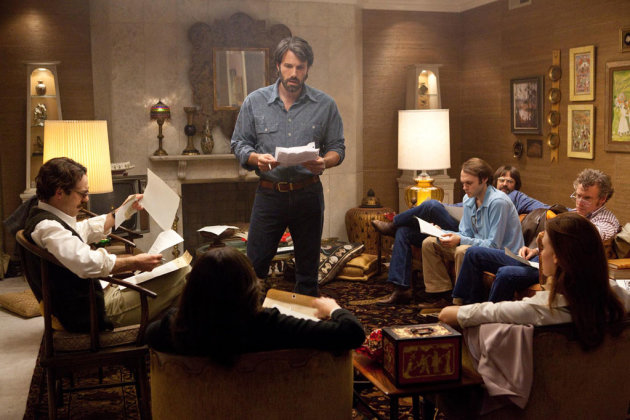
Argo tells the implausibly true story of how 6 American diplomats were rescued by a ludicrous scheme during the 1979 Iran hostage crisis. On November 4, 1979 the US embassy in Tehran was attacked by Iranian revolutionaries and 6 American staffs managed to flee and eventually hide themselves in the Canadian ambassador's house. As months go by, their situation becomes more precarious as the Iranians start to crack down on foreign residences. Meanwhile, the CIA, lead by extraction specialist Tony Mendez (Ben Affleck) managed to concoct an unlikely scheme to rescue them: by creating a cover story of a fake Hollywood movie production and the 6 Americans would pose as the Canadian film crews who are in Iran for location scouting. To help with the mission, Tony enlisted the help of the real makeup artist John Chambers (John Goodman), who won Oscars for Planet of the Apes, and fictional producer Lester Siegel (Alan Arkin) to create the necessary publicity in Hollywood to make it look real. Their scheme was so convincing that it fooled the entire Iranian authorities and the 6 Americans escaped easily (read the article that inspired the movie here). Of course, being a suspense thriller, the movie doesn't make the hostages to escape as easily as they did in real life.


The best thing that Ben Affleck has done in Argo is exercising restraint on himself from hogging the spotlight and in return, allows him to focus on what really matters: letting the great characters ensemble and story speaks for themselves and navigating the tricky maze of tonal shifts that this unbelievable story requires. As good as "The Town" was, it sometime felt like it was made to be his star comeback vehicle because he got the lead role with the best ending but his limited acting was bettered by his costars like Jeremy Renner. Here, Affleck portrays Tony Mendez in a mostly subdued and low key manner, giving his most effective performance yet. But Ben Affleck doesn't forget that the real story lies in the real characters of the trapped 6 americans, the CIA and white house staffs, and the movie producers and the Iranian guards and he gives them all (the actors) fair share of screen time to shine. Affleck also chooses to film the story almost in as much as a docu-drama style by employing as much live footage from the period and having the highest quality production values that have both authentic 70s setting and great 70s films look and feel. No doubt this is perhaps helped by producer George Clooney who used similar nostalgic styles for his stellar directing debut, Good Night and Good Luck. But Ben affleck's most amazing skill as a director here is how he manages to juggle the tonal shifts that the story requires: the tension and danger in Iran that pervades the hostages, the ineffectiveness of government bureaucracy in Washington and Virginia and the sardonic cynicism of Hollywood without missing a beat. This is shown in a small scene where producer Lester complains to Tony that he can't communicate with his children about what he really does in Hollywood because it's all bullshit and Tony just silently nods in agreement, implying the work in CIA is similar too.

Eventually, the movie reaches to its suspenseful, highly tense conclusion and no contrived and forced tricks were spared to take the audience for a ride even though they never happened in real life. But then again, you're probably already rooting for the Americans to escape so much that you simply don't care and that's when Ben Affleck has done his job wonderfully.

Rating: 4 out of 5

Argo
Directed by Ben Affleck
Written by Chris Terrio based on the book "The Master of Disguise" by Antonio J. Mendez and "Escape from Tehran" by Joshuah Bearman
Produced by Grant Heslov, Ben Affleck, George Clooney
Cast: Ben Affleck, Bryan Cranston, John Goodman, Alan Arkin, Kyle Chandler, Tate Donovan, Clea Duvall, Kerry Bishé, Christopher Denham, Scoot McNairy, Rory Cochrane, Victor Garber, Chris Messina


Monday, January 30, 2012

Quitting Blackberry

So I finally quit using Blackberry last week after planning to do so for some time. The device has outlived its purpose for me and I was hardly using BBM. I was planning to hang on to it until the next iPhone is launched because my mother just joined the BB craze late a few months ago. Unfortunately, recent circumstances have rendered me unable to postpone any longer. However, despite my switch and general dislike of RIM and Blackberry, I feel like the Blackberries I used and my time with them deserve this fond look back.

My earliest recollection of learning about Blackberry was when I was still in college in US a few years back. Back then, Blackberry was THE mobile phone that many Americans use. As someone from Asia who's used to seeing cool, sleek, small mobile phones from Nokia, I just had to laugh at those big, bulky Blackberry with full keyboards. It doesn't help that I used to scoff at many things that only Americans do and the popularity of Blackberry over there is one of those things that symbolized what's wrong with America for me. Of course, back then, I didn't know that Blackberry had robust email service that is popular with professionals and enterprise market which counted for their success. I also didn't foresee that karma will catch up to me when I returned to Indonesia in 2009.

My first Blackberry phone, the bold.


In late 2008s/early 2009s, just as Blackberry was starting to fade in US due to iPhone's rise, it became massively popular in Indonesia against all odds and logic. This sudden success is due to an unexpected cause: Blackberry Messenger (BBM). Before Blackberry took off, Indonesians used their mobile mainly to text/SMS on cheap SMS plan. With BBM that comes with all Blackberry, the chatting is faster and always online and the killer deal is that BBM use does not count against the data plan (compared to using MSN/Yahoo IM Messenger mobile client) - so using BBM to chat is "free", even more "free" than SMS. Pretty soon, everyone starting from the rich and famous started buying and using Blackberry devices (the popular one was BB Bold 9000) and it trickles down to middle class or everyone who can afford it. Then, everyone with Blackberry stops asking for phone number and ask for PIN instead. It was easy to feel left out and people just had to get these costly BB device and the data plan which isn't exactly cheap either. It was not uncommon to see everyone sitting in the same big dinner table having or using a Blackberry. In no time, Blackberry has become Indonesia's national phone. Remember that this is a phone that was designed for its email and security strengths for professionals, but it took off in general market in Indonesia due to its chatting program. It's just one of those things that can only happen in Indonesia.

My second and last BB phone curve 3G, after the first one was stolen.

Amidst the rise of Blackberry culture in Indonesia, this is also the story of me coming back home (I was laid off at the end of 2008 and had to leave US due to visa issues) and starting a long distance relationship with my then-girlfriend. When Blackberry became too popular, I had to swallow my pride and get a Blackberry too. Thankfully, to smooth things over, my then-girlfriend also got one (can't remember who got first). I got myself the ubiquitous Blackberry Bold 9000, which look I like and thought that it showed a stylish maturity for the device makers after years of making ugly devices. But I hated the lag, the shoddy trackball, the frequent Java errors, the battery hog that made me wish to go back to my Nokia instead. But all that are forgotten when I used it to communicate with my girlfriend. While we used all sorts of tools available to maintain our relationship, including IM, phone and skype, BBM were used the most by us. I believe that 70% of our interactions happened in BBM. Chatting session would usually occur around lunch my time and before bed her time. We chatted so much that I remember feeling anxious if I don't receive any BBM message for a long time - I guess that's how it feels to be own a crackberry. The relationship that lasted over 2 years was aided as much as possible by Blackberry and its messenger to its bitter end is a testament on how wonderful technology has become. If we end up getting married, I would personally thank Blackberry in my speech and raise it up to the crowd for making the wedding happen, seriously. Too bad the relationship ended and was never meant to be. All the jokes, gossip and serious conversations over 2 years with her that happen through the window of 2 Blackberry devices I owned may have been forgotten, but I'll never forget the fact that they occurred in my life and for that I'd like to thank Blackberry for having been an important part of my life.

Monday, May 30, 2011

IRIS (2009 K-Drama) Review


Background:

As far as I can remember, from the time when the Korean Wave started in the early 00s, I have never finished watching a Korean TV Drama. I have only watched the following titles: Hotelier, Attic Cat, Love Story in Harvard and What Happened in Bali and only liked the first two but never finish any of them. This is because I tend to find the script and production values to be similar to Hong Kong/Taiwan standard but poor compared to their cinematic counterparts, which is shocking considering how popular they are. It seems that most Korean dramas tend to rely on their stars and overly melodramatic and unrealistic soap opera plotlines to attract their core audience, of which I just simply don’t belong in.


Therefore, it is with great interest and curiosity when I learnt the existence of the drama IRIS, because of Lee Byung-Hyun participation in it. By 2009, Lee Byung-Hyun has become a top film actor internationally, fresh off starring in the Hollywood blockbuster GI Joe. It therefore begs the question why he would choose to return to Korean television after all that success. Is it money? Is the material good? If it happens to be both, could this finally be a Korean drama that’s worth watching for me?


Plot:

Kim Hyun-Jun (played by Lee Byung-Hyun) and Jin Sa-Woo (Jung Joon-Ho) are best friends and two of the finest soldiers serving in the South Korean military. They are then scouted and recruited to join NSS – the South Korean version of CIA – by the beautiful agent Choi Seung-Hee (Kim Tae Hee). At first, everything seems to go smoothly for them as they foil an assassination attempt at the new South Korean president by the North Koreans and Hyun-Jun manages to date Seung-Hee (much to the dismay of Sa-Woo). However, after a botched operation in Hungary, Hyunjun is suddenly betrayed by NSS and wanted by both the South and North Koreans. Forced to go on the run and separated from the woman he loves, Hyun-Jun vows revenge and along the way, he discovers the existence of a secret organization called IRIS.


IRIS has existed since the end of the Korean war and has members deep inside both the North and South Korean government. They have been involved in a vast conspiracy manipulating the current affairs of the 2 countries for decades – one of which involve the mysterious death of Hyunjun’s parents – to ensure that the Koreans will never be reunited and the organization will forever profit from the never-ending conflict. With the new South Korean’s president’s heart set on a serious Korean reunification, IRIS has planned a big terrorist attack to prevent that from happening. Hyunjun has no choice but to form an uneasy alliance with 2 former enemies and North Korean agents (Kim So Yeon and Kim Seung Woo) to stop IRIS once and for all, even if it pits him against the woman he loves and his former best friend.


Review:

IRIS is indeed the most ambitious Korean TV Drama ever made at the time: costing 20 million US Dollar, shot in multiple countries across 2 continents, with a famous lead actor fresh off a Hollywood blockbuster and last but not least, it attempts to do a serious spy action thriller - a genre perhaps never done before on Korean TV. I am happy to report that the end product is a high quality TV drama well worth watching, if you can get past some initial issues related to it being a Korean TV drama.


The biggest problems with IRIS are that it has to follow certain K-Drama conventions and that it sometimes feels like a product that has to show its money’s worth to the investors. This is particularly obvious in the first 5 episodes or so – where the production values, writing quality is as bad as other typical Korean dramas. In the beginning, Hyun-Jun is still a young military kid who goes to college and flirts with pretty girl Seung-Hee who’s secretly evaluating him as a possible agent material. These meet cute early scenes can test your patience and makes you wonder if this is just going to be another cheesy Korean drama. It is also embarassing to see Lee Byung Hyun go from being uber-cool in GI Joe to see him attempt being a college kid in a Korean TV drama.


The series, in the beginning, also tend to switch tone suddenly from serious to cheesy/corny romance in a second. This is particularly true during the scenes where Hyun-Jun and Seung-Hee starts dating and they go to Akita, Japan for vacation while their best buddy Sa-Woo is on a mission in Hungary. A 5 minute action scene in Hungary can be followed by a 15-20 minutes scene where Hyun-Jun and Seung-Hee enjoying themselves with the beautiful snow scenery and both of them romancing and acting cute around each other. Obviously these scenes are obligatory for the good people in Akita, Japan who have generously allowed filming in exchange of heavy promotion as well as the K-Drama fans who expect this kind of romance. But these are also scenes that will make producers of 24 and Alias cringe and faint. Lastly, like another K-drama, it will never let you forget that there’s a love story going on by replaying the same 3-4 love ballads in almost every episode, and oh, when T.O.P makes an appearance, a Big Bang rap song is never far away.


But if you can get past all these problems (which only happen in the beginning anyway), what you’ll find is a compelling, believable and entertaining spy thriller. It may not be comforting to Korean people, but one of the best things that come out of the Korean conflict is a rich source for good drama just like the cold war for the American culture. The writers of IRIS may have liberally borrowed from 24, Bourne films and Tom Clancy and even Korean movies like Shiri, but they have also integrated them with the current Korean conflict well and smartly enough, particularly with the idea of a Korean version of Illuminati-like secret organization, that results in a fascinating spy thriller tale that can stand on its own.


The writers are also smart enough to use the conventions of a spy thriller genre to put a fresh spin on the dead tired star crossed lovers cliché in Korean soap operas. Whereas a typical K-Drama will usually have the two lovers separated due to family issues, mistaken identities and god forbid another fatal disease, IRIS cleverly uses a convention of the spy genre – a failed operation and mistaken deaths – to separate Hyunjun and Seunghee for more than half the episodes. It’s not terribly original, but I though the way it’s handled is quite refreshing and actually manages to make us root for their reunion.


There is also an undercurrent of nihilism and futility beneath the drama as a result of following the spy thriller genre conventions, similar to 24. Characters die left and right and get replaced endlessly as the conflict never ends as both sides refuse to give up no matter what. Characters that start out loyal to their countries end up questioning if their loyalty is worth it and for whom is their loyalty truly for. Even fitting for a Korean drama, lovers get separated and more than one love is unrequited. These dark themes make the drama stand above the rest of the others that are only interested in exploring “true love” again and again.


Cast and Characters:


Lee Byung-Hyun as Kim Hyun-Jun

Despite being the lead actor and the main star attraction, Lee Byung-Hyun only does the minimum to make the audience care about his character. This is not a knock against him, but the character Kim Hyun-Jun is just your standard brooding hero seeking revenge against those who wronged him and Byung-Hyun mostly plays him in a subdued, angsty, sad mode. Fortunately, the character is surrounded by interesting characters that make his character arc interesting. At least his film experience makes him look good in action scenes and whenever the occasion requires him to pander to K-Drama fans, he can also flash a wide charming smile in an instant and cry convincingly on cue. But this is not a role that he will be remembered for in his career.


Kim Young-Chul as NSS Vice-Director Baek San


Not a well known name, but Kim Young-Chul takes the honor of being the best actor in the series with his excellent performance as the villain. Baek San is the leader of NSS who recruited Hyun-Jun into NSS and betrayed him, revealing himself to be a high-ranking member of IRIS. He is cold, manipulative, cunning like a snake around the President and his strong loyalty to IRIS makes him a dangerous and fascinating villain to watch.


Kim So-Yeon as Kim Seon-Hwa

This is perhaps the most interesting, complicated and best realized character in the whole series. Kim Seon-Hwa started as a tough North Korean adversary to Hyun-Jun but circumstances forced her to abandon her country and work together with Hyun-Jun. Along the way, she reveals hidden kindness beneath her tough exterior and develops unrequited feelings for Hyun-Jun. She makes most of the difficult decisions throughout the drama and her complex relationship with Hyun-Jun is perhaps the best thing that drives the series emotionally. Actress Kim So-Yeon, previously famous for being in All About Eve, aces this role both emotionally and physically – unlike the lead actress, she actually looks good with guns and fights. It’s also credits to the writers that the relationship is treated with utmost respect and never goes over the top. If there’s any complain about her is that her role gets unceremoniously reduced to being Hyun-Jun’s driver and action buddy as the series draws to a close.


Kim Seung-Woo as Park Chul-Young


I fondly remember him as “Manager Han Tae-Jun” in Hotelier. However, like Lee Byung-Hyun, his character suffers from being too standard– he’s just another general who is loyal to his country and is willing to do anything for it and there’s not much the actor can do beyond that.


Jung Joon-Ho as Jin Sa-Woo


As a best friend turned rival to Hyunjun, this is the most predictable character in the whole series, despite going through a lot of character development in it. This is because the actor (and perhaps the writer too) play him as too much of a pathetic Mr Nice Guy and if you have watched enough dramas, there is no doubt where he’ll end up. It’s a pity because the character is a little interesting and the actor does work hard portraying him.


Kim Tae-Hee as Choi Seung-Hee


Where to start? Firstly, there’s the fact that from the beginning the audience is supposed to buy her immediately as this beautiful, intelligence and tough female secret agent. Then a few episodes later, she falls totally head over heels for Hyunjun, her subordinate, just because Hyunjun flashes his Lee Byung-Hyun mega smile and forced her to kiss him. Too bad Kim Tae-Hee is only pull off the part of being beautiful. There’s also the added embarrassment that she never looks convincing at all with guns and there are many scenes that require her to do that that just fall apart. Worst part is her acting. I once read a review of a Korean martial arts fantasy starring her called The Restless on lovehkfilm.com. The reviewer has this to say about her acting: “The lovely Kim Tae-Hee … appears to possess only one facial expresion: a deer-in-the-headlights look meant to channel horror, surprise, disgust, fear, wonder, and probably happiness, hunger, and arousal too.” I am sad to report that 5 years on, this still has not changed in the series. At least in the series she is only required to mope after Hyun-Jun mostly which isn’t hard to do.


T.O.P as Vick


And then there’s T.O.P from Big Bang, a stunt casting decision by the producers to court the young K-Pop crowd. To his credit, T.O.P does have that inhuman quality in his look and he is very effective at looking cold, emotionless and sadistic whenever he kills someone. But then again, he is T.O.P from Big Bang and there’s always a Big Bang rap song that follows him around.


Verdict:

IRIS has everything for everyone: there’s an amazing cast lead by a big Korean star for the Korean pop culture fans, there’s a good spy thriller story for people looking for something serious, there’s the usual trappings of K-Drama romance for existing fans, there’s TOP for those younger K-Pop fans and there’s even snowy Akita, Japan for those looking for nice touristy place to gaze at. I guess what I’m trying to say is watching this most ambitious Korean drama ever made is perhaps also the best way to introduce people who has never watched or hates Korean drama to watch them without turning off the existing K-drama fans. Despite some flaws this is a perfectly fine series for everyone, but one wonders there’s a better spy thriller in here had the producers even go more daring than it already is now. – 3.5/5


Pictures credit go to http://www.hancinema.net

Friday, January 14, 2011

The Tourist


The signs that The Tourist wouldn't turn out good is there in the poster. The pairing of 2 of the current hollywood's top actors now are curious at best, mismatched at worst: Johnny Depp who's normally doing wacky roles and Angelina Jolie who's usually into more serious roles. But the pairing is not what causes the film to fail. In fact, Depp does well in a welcome change as an ordinary joe stuck in an extraordinary situation and Jolie does her usual unattainable beauty role, although she does look old here. However, the worst failings of The Tourist is that its script (credited to 2 oscar winners) is simply too by the book and predictable. Even worse is as a travelogue film that shoots in Venice, the scenery aren't good enough to compensate. This seems to be a hollywood reel for director Florian Henckel von Donnersmarck, who previously directed the clinically efficient but cold The Lives of Others (which won best foreign film oscar). But sadly, the monotony of the film doesn't make it a good reel either.If you want to see a better film about an american stuck in Italy, watch The American. - 2.5/5

Get Him To The Greek


A hilarious comedy that succeeds because of how many unexpected pleasant surprises are there in store. Who'd have guessed that Russell Brand is capable of showing some humanity while playing (or just being a variant of himself) an obnoxious rocker? Who'd have guessed that Jonah Hill is capable of doing a straight man considering that many of his roles so far only consist of being borderline annoying friends in Judd Apatow movies? Who'd have guessed Sean "P. Diddy" Combs could be so funny? Even a normally serious actress Rose Byrne gets to go against type to hilarious results.

Writer/director Nicholas Stoller returns in this follow up to his previous Forgetting Sarah Marshall. But the confused emotions that hamper FSM doesn't happen here, which makes this comedy gold another great outing from Judd Apatow factory. - 3.5/5

Saturday, August 1, 2009

Twilight Review


Twilight is a good example of an unlikely good movie can be made from a mediocre source material when a smart and talented director is in charge. It's easy to dismiss the adaptation of Stephanie Meyer's phenomenally popular novel about the romance between a teenage girl and a vampire as nothing but another laughable, cringe-inducing entry to the teen supernatural genre (e.g. The Covenant). But the decision to hire director Catherine Hardwicke (Thirteen) - along with screenwriter Melissa Rosenberg (TV's Dexter), composer Carter Burwell (frequent collaborator of Coen Brothers) and talented young actress Kristen Stewart (In The Land of Woman, Into The Wild) - shows a serious attempt to inject quality to the project . The resulting end product, while unable to overcome the weakness of its source material, is still interesting and watchable in its own right.

The film opens with 17 years old Bella Swan (kirsten stewart) moving to the rainy small town of Forks, Washington to move with her estranged father. While struggling to adjust to life in a new town and high school, she finds herself attracted to a shy mysterious guy, Edward, (Robert Pattinson) who only hangs out with his family members, The Cullens. While Edward initially rebuffs all her approaches, he eventually reveals that he and his family are vampires who abstain from human blood and that he struggles to contain his strong desire for her blood. Amidst all this, a
romance blossom between them that is put to test when a group of hungry wandering vampires come to town and set their sights on Bella.

Oddly enough for a film about vampires, the best thing about it has little to do with vampires. Shot mainly in Oregon, the cinematography by Elliot Davis lenses most of the outdoor scenes through the right amount of blue filter to create a suitably melancholic atmosphere around the small town and its surrounding forests and mountains where rain greatly outnumber sunlight - the perfect place for vampires to hide. Director Catherine Hardwicke also brought her keen insights about high school life displayed in Thirteen to this film, making the high school scenes and its occupants seem real and not just another stereotypical hollywood high school students. Lastly, the awkward relationship between Bella and her father is developed very subtly and effectively despite a limited screen time but culminates in an emotional scene towards the end.


However, the vast majority of twilight's female target audience do not come to watch those things. They come to see Edward and experience the burning romance between Bella and Edward. In that respect, the movie delivers in spades as it spends a lot of its running time showing both Bella and Edwards getting lovey dovey with each other; with scenes of them staring longingly at each other, lying down in the forest and even flying through the trees to the tune of Carter Burwell's soaring piano crescendo. But they're all wasted because we're never convinced why these two individuals would fall for each other. We are supposed to accept that Bella falls in love with Edward just because he shows up for the first time and Bella can't take her eyes off him! This is quite problematic because up until then, Kirsten Stewart gives another fine, reliable performance as a vulnerable teenage girl, but the moment Edward enters the picture, she's forced to overact her obsession/attraction to Edward by shivering a lot and giving a lot of overly serious and nervous glances at Edward and it feels creepy sometimes. Edward, on the other hand is a typical cold and mysterious character that doesn't require Robert Pattinson anything more than looking handsome and brood a lot. Given that the film is about the romance between these 2 characters, it's unfortunate that they're not felt at all except by the built-in fans of the books.

One wonders, given the strength of the film outside the central romance and the vampires, could there be a better movie had the Catherine Hardwicke choose to stray far from the source material? They could have just used the basic story as a metaphor a teenager trying to grow up in a new unfamiliar place rather than focusing the romance itself. But given what she has to deliver to the fans of the series, it's amazing that the film is quite watchable. That's why given that she does not participate in the sequel, the quality of the remaining series remain uncertain.


Rating: 3 out of 5

Twilight

Directed by: Catherine Hardwicke
Written by: Melissa Rosenberg based on the novel by Stephanie Meyer
Starring: Robert Pattinson, Kirsten Stewart, Cam Giganget, Billy Burke, Peter Facinelli, Taylor Lautner, Nicky Reed, Ashley Greene, Rachel LeFevre


Monday, July 20, 2009

King Review


During the summer and school holiday period of 2009, 2 Indonesian family films with similar sport themes are released to capitalize on the success of "Laskar Pelangi": Garuda Di Dadaku and King. Unlike Garuda Di Dadaku, King has one unexpectedly original thing going for it: it is maybe the first mainstream film in the world to feature Badminton - a sport popular in Asia, especially Indonesia and China - as its subject matter. Too bad that King squanders this great chance to make a good debut for a badminton film genre and like Garuda, it suffers from script problems with an unlikable main character.

King tells the story of Guntur (Rangga Aditya), a village boy somewhere in East Java who's plays badminton to please his father (Mamiek Prakoso), a big fan of badminton and Liem Swie King (Indonesian and World Badminton Legend in the 80s, whose name the film takes its title from). In the beginning, Guntur plays badly and has to endure numerous punishment by his father, but with the help of his 2 best friends Raden (Lucky Martin) and Michele (Valerie Thomas), he slowly improves. As he starts winning village tournaments, he set his sights to eventually become a member of the prestigious Jarum Kudus Badminton Club, where Indonesian badminton legends such as Liem Swie King and Heriyanto Arbi made their mark.

Garuda Di Dadaku and King never hide their inspiration from the success of Laskar Pelangi. King, particularly takes a page from Laskar's on location shooting and give us beautiful shots of Volcano Crater and aerial shot of deers running through the jungle. However, unlike Laskar, most of these feel like a tourism advertisement rather an integral part of the movie. Why would 2 boys go to the top of a volcano to discuss their problems? We don't know, but the scene's there. But that's the least of the film's problems. Right from the start, King suffers from a messy script that fail to develop a clear journey for Guntur's badminton quest. Sometimes the film feels like a few TV episodes strung together as plotlines of new tournament or badminton club come in disjointed one after another. But King also suffers from one crucial problem: for someone who's supposedly aspiring to be a player, Guntur does not like playing Badminton at all. He spends the whole movie brooding and rarely smiling. We're given copious amount of his voiceover saying he has to succeed because of his father, his friends, his neighbour, his country but we never know whether he's truly passionate about what he's doing. In fact, like Garuda Di Dadaku, Guntur's success are more often due to help from others like a neighbour who lends his racket or his best friend who register him in a badminton club (without his knowledge). But in return, Guntur often lash out at his friends or suffer in silence. The filmmakers might have intended to make something inspirational, but what they've made is more depressing instead. If there's a silver lining, it's that for a while the film is smarter than Garuda Di Dadaku in its treatment of action and consequences of lying, but that plotline is over so quickly and too bad the rest of the film never matches that early good part.


As a rare Badminton film, the film will disappoint fans for sorely lacking any exciting badminton scenes. Most of the badminton scenes are just made of alternating close-ups of each player smashing at each other or shots of shuttlecocks hitting the rackets and floors. Rarely do we get a wide shot of a match going on and in fact, shots of audience reaction far outnumber anything that actually goes on the court! Maybe it's just the short shooting schedule that can't afford the actors to train, but this is such a wasted opportunity because had the filmmakers actually bothered to make the Badminton scenes exciting at least, Indonesia could have claimed to make the first exciting badminton film ever! But instead, what Badminton fans get are glorified cameos of past Badminton stars like Heriyanto Arbi and King himself.

In my Garuda Di Dadaku review, I wrote that god help this country if it becomes a typical Indonesian sports film. King needs to be added too. Let these be the example of films not to make if Indonesia wants its film industry to succeed internationally.

King
Cast: Rangga Aditya, Lucky Martin, Valerie Thomas, Mamiek Prakoso, Surya Saputra, Wulan Guritno with special appearance by Liem Swie King
Directed By: Ari Silahase
Written By: Dirmawan Hatta

Wednesday, July 15, 2009

Garuda Di Dadaku Review


Title note: Garuda Di Dadaku literally means Garuda On My Chest. It refers to the Garuda Bird Mascot that's attached to the jersey of the Indonesia's Men National Football Team.

Garuda Di Dadaku is among the first batch of well meaning family films in 2009 to capitalize on the success of Laskar Pelangi. This hybrid of well-meaning moralistic family film and nationalistic sports film has its credentials boosted by having the same writer and the same company that co-produced Laskar Pelangi . However, unlike Laskar Pelangi, Garuda Di Dadaku ultimately disappoints as it suffers from script problems that prevent us from caring about the main character.

Garuda Di Dadaku tells the story of Bayu (Emil Mahira) a boy who dreams to one day become a professional soccer player who represents Indonesia. However, his grandfather (Ikranegara, the principal in Laskar Pelangi) has different ideas: he wants to see Bayu succeed in more established fields like painting or music. Plus, the early death of Bayu's former soccer player father makes the grandfather more determined than ever to drive Bayu away from soccer. Luckily, Bayu has 2 good friends who help cover for him while he secretly trains for an audition to join the national Under-13 Team: Heri (Aldo Tansani), the rich but physically handicapped best friend and Zahra (Marsha Aruan), a mysterious girl who lets Bayu practice secretly at her cemetery home. But how long can Bayu keeps the lies from his grandpa? Can Bayu makes it to the Indonesia National Under-13 Team?

Perhaps the most interesting part of the film is how much it is thematically the opposite of the film that perhaps inspired this: Laskar Pelangi. Unlike Laskar Pelangi's earnest pro-education agenda, Garuda Di Dadaku shares some similar themes with Singaporean Jack Neo's I Not Stupid films: that Asian kids today are under pressure to succeed in society that they have to sacrifice their passion for a more secure life path. Unfortunately, the film has one giant script flaw: Bayu is not a character worth sympathizing or rooting for because he doesn't seem very talented and most of his success happen because of his friends' actions, not his.


Remember the soccer film Goal! that tells the story a Mexican-American guy who goes from a nobody to an English Premier League player overnight? It wasn't a very good movie but at least it spent a lot of time showing off the character's football skills to convince us he's the deal. In Garuda, Bayu's skill is only limited to one well placed free kick and a few workmanlike dribbling and nothing more. But bigger weakness lies in the relationship between Bayu and his best friend Heri. Heri is a problematic fairy godmother character because whenever Bayu has a problem, Heri always offers help (sometimes without even being asked) by using his wealth or by encouraging Bayu to keep lying just because he's so nice and he wants Bayu to succeed. Although we're given hints that Heri is also a passionate soccer fan and that his handicap and absentee father crushed his dream, his motivations remain shallow and too good to be true. But of course, Bayu himself is so unmotivated and helpless under his grandfather's spell that he's always on the verge of giving up unless Heri coaxes or forces him to continue. This won't be a problem if this film is about Heri encouraging his best friend to pursue his dreams, but this film is about Bayu and it's perplexing to see the screenwriter forget something so basic: that Bayu has to solve his own problems, not Heri. Still, the worst is yet to come: it the end the grandfather eventually found out about the lies, yet the movie still manages to tie everything so nicely and happily for every character that it feels like a cheat. In an ironic twist, this is a family film that wants to teach good lessons, and yet end up having an unmotivated main character who keeps lying and get a happy ending after all.

In a typical Hollywood sports film, the hero would usually actively fight against all odds by himself before emerging victorious. If Garuda Di Dadaku becomes a typical Indonesian sports film, god help this country because it means more films where the hero is helpless or unwilling to do anything unless there's external help from sources like a rich best friend. Hence, this film shows why the Indonesian film industry, while growing nicely, still has a long way to go before it can be well regarded Internationally.

Rating: 2.5 out of 5

Garuda Di Dadaku
Cast: Emil Mahira, Aldo Tansani, Marsha Aruan, Ikranegara, Maudy Koesnaedy, Ari Silahase
Directed By: Ifa Isfansyah
Written By: Salman Aristo


Friday, July 10, 2009

Laskar Pelangi Review


In 2008, a box office miracle not seen since the phenomenal success of Ada Apa Dengan Cinta resurrected the local film industry in 2002 happened in Indonesia. Laskar Pelangi (Rainbow Soldiers), an education-themed family film based on the novel by Andrea Hirata and made by the same production team behind Ada Apa Dengan Cinta filled cinemas and caused lines to form for months. By the end of its theatrical run, Laskar Pelangi has amassed a record 4.6 million audience. The film was well received enough to be submitted as Indonesia's official entry to Academy Award category for best foreign film 2008 as well as the official selection of Berlin Film Festival 2009. Thankfully, the film lives up to the hype. Despite the occasional preachiness and the near-propaganda ending, this heartwarming, sincere pro-education parable is one of the best indonesian films ever made this decade.

Laskar Pelangi opens in 1999 with Ikal (played by Lukman Sardi) reminiscing about his childhood as he returns to his hometown in Belitung, Indonesia. In the 1970s, Belitung is a thriving Tin Mining town and Ikal (child played by Zulfanny) is sent to a free local muslim elementary school, SD Muhamaddiyah. On the first day, the school already runs into trouble as it's one short of the required 10 minimum pupils for the school to function until one arrives at the last minute. This is the first among many difficulties that would continuously threaten the school's existence for 6 years of the 10 kids' education, the least of which include lack of money and resources, competition from better local schools. Nevertheless, under the guidance of their caring teacher Bu Muslimah (Cut Mini) and principal Pak Harfan (Ikranegara), the 10 kids (who call themselves "Laskar Pelangi"), including the smart Lintang (Ferdian) and the artistic Mahar (Veris Yamarno) persevere to complete their education and, along the way, winning contests and respect from their peers.

It's easy to see why Riri Riza (Gie, 3 Hari Untuk Selamanya) is considered to be one of the best working film director in Indonesia. By casting local Belitung kids in the "Laskar Pelangi" roles and having all cast members speak in local belitung dialects as well as shooting on location in Belitung, this film ensures authenticity in an industry that rarely values it. The decision to shoot on location in Belitung also pays off in spades as it becomes a rare indonesian film to be set outside of the capital city Jakarta. Furthermore, by using natural filming style that recalls Abbas Kiarostamis' films, we get to see some rare, beautiful sights of indonesia: sandy beaches, cliffs, coconut trees, muddy pathways, villages and factories that give a peek at a working class life. The cast is also bolstered by who's who in Indonesian acting including Tora Sudiro, Lukman Sardi, Matthias Muchus, Alex Komang and Ario Bayu in supporting roles. But perhaps the biggest surprise have to go to Cut Mini who gives a career defining performance as the kind hearted Muslimah. Sporting a Belitung accent, it's hard to believe that this is the same actress who played a frustrated Jakarta career woman 6 years ago in Arisan. So successful is she that she's now reprising the character for free education PSAs playing on Indonesian televisions right now.


The biggest challenge this film faces is maintaining the balance between promoting its pro-education agenda and telling a good story. On the surface, having the kind of story about poor kids struggling to keep their education alive invites temptation for sermonizing and blatant emotional manipulation but credits to Riri Riza and the writers for being smart enough to let the good story do its job despite the occasional but perhaps obligatory preachiness. However, in a regrettable moment towards the end, even the filmmakers cannot restrain themselves enough from loudly proclaiming their message and it almost ruins the movie. At the end of the movie, one important character suffers from a tragic fate that forces him to quit school entirely, and it is immediately followed by Ikal's voiceover saying something "it's too bad a child like ... cannot finish study in this country". That moment of a political advertisement takes the audience out of the story and if there's a big weakness in the movie, that is it.

Laskar Pelangi's is successful enough to warrant a sequel, also based on the sequel novel called "Sang Pemimpi" (The Dreamer), made by the same people behind this film to be released end of this year. While it is hoped that the sequel will be just as good and successful against its now high expectation, there's also a danger that this series (there are 4 books in the Laskar Pelangi series) would turn into another Hollywood style franchise where the films get worse progressively (It is also hoped that films won't get more and more preachy). Let's hope for the sake of the developing local film industry and Riri Riza's talent that the rest of the films will remain just as good as the film that has started it.

Rating: 3.5 out of 5

Laskar Pelangi
A Miles Film and Mizan Productions Production
Cast: Cut Mini, Ikranegara, Zulfanny, Ferdian, Verus Yamarno, with Lukman Sardi, Tora Sudiro, Slamet Rahardjo, Matthias Muchus, Alex Komang and Ario Bayu
Directed By: Riri Riza
Written By: Salman Aristo and Riri Riza & Mira Lesmana based on the novel by Andrea Hirata

PS: Kudos to the people in Jive Entertainment for making a high quality DVD worthy for this film. The quality of the film's official DVD matches the quality of DVDs produced in Hollywood and overseas with good video quality with colourful and comprehensive extra features. Indonesia's film industry have been making make poor official DVDs for too long and while that's ok for the majority of the crappy indonesian films, some good films like Joko Anwar's Kala get the short end of the stick because of this. That's why it's good to see that the industry is capable of giving a good film the dvd treatment it deserves.

Sunday, July 5, 2009

The Ramen Girl Review


"There's something about the japanese and making the perfect bowl of soup ... it's like with each bowl, you try to get closer to perfection ... it's kind of beautiful" - Abby

In spite of having a cringe-inducing corny premise and an unconvincing lead actress, The Ramen Girl surprisingly succeeds as an affecting mediation on the conflict between following well-established tradition and pursuing a personal path. While stories about A Westerner getting lost in an unfamiliar Japan and a westerner learning a new culture (in this film's case, Ramen, a popular Japanese noodle soup dish whose strength lie in the broth) from a Japanese Master have been done many times before, The Ramen Girl still manages to freshly stand out and avoids the stereotypical Hollywood treatment of asian-related material thanks to an unexpectedly intelligent and deep screenplay by Becca Topol.

The Ramen Girl tells the story of Abby (Brittany Murphy), an American woman who goes to Japan to join her boyfriend, only to have him quickly dump and leave her alone. Late one night, while lost in an unfamiliar place and nursing a heartbreak with no one to turn to, she randomly drops by a neighbourhood Ramen Shop that's closing for the day to vent her frustration. Thinking that the petulant guest was seeking food, The Ramen chef, Maezumi (Toshiyuki Nishida) cooked her a bowl of Ramen to make her go away. However, the bowl of ramen was apparently so good that Abby instead went on to beg the chef to teach her how to cook the "perfect bowl of Ramen". Thus begin a journey between 2 mismatched individuals: the old-fashioned, traditional, uptight Japanese chef and the young, spoilt, volatile American girl. Both have to change and overcome their differences, both verbal and mental, in order to get what each want. The stakes are raised when Maezumi made a bet with his rival that Abby's ramen will win the approval of The Grand Master of Ramen, otherwise he will give up his ramen shop entirely.


On the surface, the film seems like an odd mix of Lost In Translation and The Karate Kid. While Robert Allan Ackerman's pedestrian direction (he's a veteran of TV Movies) does not attain the intellectual, esoteric height of the former film, Becca Topol's screenplay is much smarter and insightful than the latter's in its portrayal of The Japanese. Maezumi's training method is so borderline abusive - there's almost no attempt to speak English or hire a translator, Abby has to learn everything without knowing what she was supposed to do - that it makes Mr Miyagi looks like Mr Rogers. But by not softening the character, the film succeeds in portraying the stubborn, perfectionist, samurai psyche of the Japanese accurately.

The film's use of Ramen as a life metaphor sounds corny but the execution is far from that. Through the passing of the knowledge on how to cook Ramen, both student and teacher are each given his/her own meaningful character arc that resonates strongly with each other. Maezumi's approach to cooking a bowl of ramen involve years of experience and endless preparation to achieve perfection. While this samurai approach is tried-and-true and admirable, it makes him lose touch with the modern world, resulting in a sad loss of an apprentice in the past. The sudden appearance of Abby gave him an unlikely second chance of a successor even if she's the last person she wants to teach. For Abby, who's a lost soul in the beginning, what initially starts as a blind pursuit eventually guides her closer to her true self. No matter how hard she try to replicate Maezumi's perfect ramen, she can't and won't be able to unless she finds out who she truly is. While there is a low key showdown at the end between Abby and a rival apprentice, the ending is smart enough not to cheat and conclude both Abby and Maezumi's journey on a gratifying note.

One weakness of the movie is lead actress Brittany Murphy (8 Mile, Sin City). At the beginning, she acts like a typical hollywood rom-com damsel in distress, channeling the worst of Meg Ryan. This nearly derail the movie but fortunately she does catch up as the movie gets better. However, one wonders how much better this film can be with a better actress. As for the Japanese cast and characters, they are filled with familiar faces that populate Japanese TV dramas and movies. There's the stoic samurai like Maezumi and his loyal, unsuffering wife Reiko and even the ramen shop patrons are similar to stock characters from Japanese TV and Dramas. These are not necessarily a bad thing since it shows how familiar director Ackerman and writer Topol with Japan and considering Hollywood tend to butcher them much worse. Toshiyuki Nishida's portrayal, in a way that fits his character, is workmanlike and professional, good enough to make the character work but he won't be the next Ken Watanabe.

The movie has gone Direct-to-dvd in USA and has gotten undeserved negative reviews all over the place. Give this movie a chance and you will discover, like Abby does, an unlikely encounter with a perfect bowl of Ramen in the middle of nowhere.

Rating: 4 out of 5

The Ramen Girl

Starring: Brittany Murphy, Toshiyuki Nishida, Tammy Blanchard, Park Sohee, Kimiko Yo and Tsutomu Yamazaki
Directed By: Robert Allan Ackerman
Written By: Becca Topol

Wednesday, June 24, 2009

Transformers: Revenge of The Fallen Review


People sometimes wonder why I angrily bash some bad movies when they're not meant to be taken seriously anyway. The fact is, I do not care about bad movies, I watch a few, shrugs or chuckles and move on. It's the worst films that get to me. Films that are so bad they provoke some unpleasant feelings from you, making you want to beat some people up (probably the director). Transformers: Revenge of The Fallen is one such films.

It's hard to see how this film could go wrong. I rather liked the first film, it was one of those guilty pleasure films that has great special effects (one of which is Megan Fox) and awesome moments; as long as they continue to do more of the same, it should be fine, right? Turns out whatever good things that happened on the first film was just happy accidents. The sequel is like a repeat of the first film without the things that make it good and for that, director Michael Bay has to absorb all the blame because there's no mistaking from that this is the film that he wants to make. There's a good reason that I wrote in my review of the first film that "A Michael Bay film" is one of the scariest four words ever and this film only drives the nail to the coffin for that. This is probably the last Michael Bay film I will ever see.

Another GM Car Commercial funded by taxpayer bailout

The plot, if you can call it that, is of course about a new battle that pit the good guys Autobots vs bad guys Decepticons. We learn early that The Transformers have visited Earth in 17000 BC when one of them, The Fallen (voice of Tony Todd), attempted to destroy the earth but were banished by his better brothers. Fast forward to the present day when we learn that The Fallen is the mastermind of the attack of the Decepticons on the first film. This time, he's planning another assault, by first resurrecting his apprentice, Megatron (voice of Hugo Weaving), to find a device called "The Matrix of Leadership" to finish what he started. The location of The Matrix is unwittingly placed onto the head of Sam Witwicky (Shia LaBeouf), the accidental human protagonist who accidentally acquired it by touching a small remaining piece of Allspark from the first film. So begin the race between The Autobots lead by Optimus Prime (voice of Peter Cullen) and The Decepticons to find Sam and The Matrix, and this is only the first half of the film.

I wasn't really sure why I like the first film but after watching this film, the reasons dawn on me. Transformers is just another Michael Bay film with a few elements of a good, enjoyable film. To understand why, one needs to understand Michael Bay.

Michael Bay isn't seeing what the audience is seeing

Michael Bay is often criticized for making mindless action movies, but many critics fail to take notice that there are many directors who blow stuffs up and make mindless blockbusters but only Michael Bay can make a Michael Bay action film. His works are easily identifiable by watching them; just as easy to identify a Kubrick's or Scorsese's. In other words, Michael Bay is an auteur director, an artist, except one whose work express so much hatred and contempt at the audience. Rarely a scene goes by where any of these things don't happen: 1) a bright/orangey oversaturated cinematography, 2) Camera that spins round and round characters when talking or posing, 3) Disturbing fetish of female babes physiques, 4) Disturbing fetish of macho male characters (usually cops/military) usually through the use of slow motion, 5) Sickeningly excessive worship of the US military 6) Characters that talk too loud, too dirty or are too retarded for no apparent reason. All these often occur unnecessarily and worse, hinder any possible chance of character or story development because any attempt to understand or enjoy what's going on is lost in the mayhem. Is it too much to ask for a simple, coherent story, a camera that doesn't move, likeable and identifiable characters that don't talk like they're retarded? These are not hard when an overwhelming majority of films have them, even some of the worst films. Michael Bay isn't interested in those things, he's only interested doing things in his own twisted, fucked-up way. The only way to enjoy his films is to turn off your brain and be completely mindless. In a way, he is the anti-storytelling filmmaker, a dangerous one.

More US Military propaganda than Optimus Prime in the movie.

The first Transformers possess all the hallmarks of a Michael Bay film but it also coincidentally have got some basics right: The Autobots, despite their shabby treatment, are basically a likable, underdog protagonists* who are inferior and always behind the Decepticons, and Megatron is only shown in the beginning and the end and prove to be a menacing presence that makes the final showdown between him and Optimus Prime worthwhile despite the chaos. This film has none of that to redeem any negativity created by Michael Bay. A key protagonist robot* dies halfway through and he's replaced by 2 new annoying robots who talk like offensive black/mexican gangsta stereotypes. Megatron, so menacing in the first film, was resurrected only to play a 2nd fiddle to the new villain, The Fallen, who actually don't do much and gets killed off way too easily in the end. There are some things that defy common sense (not that films like this demand them, but nevertheless) like the destruction of many cities in the world halfway in the movie and yet the world carries on like it never happens (contrast this with Michael Bay's Armageddon) and the shabby treatment of a potentially awesome villain: a multiple transformers combining into one giant mega robot like Voltron, Devastator; he shows up, do some awesome stuffs only to get shot down by a US Warship (victim of Bay's relentless US Military worship). Speaking of US Military worship. many scenes of fights are not even between the robots, but between 2 sides and the US Military who are capable of shooting down the robots, I don't know if Bay is aware, but if the transformers can be defeated by the US Military, then they lose their awesomeness. I know, what you're thinking, there's still Megan Fox, right? Guess what, she only have 1 brief clothes changing moment of hotness early in the movie, the rest she just spend running and running around fully clothed. What's left is just endless Michael Bay's regular bashing of the audience running for 2.5 hours.

Some reviews have called this film racist, misogynistic and obnoxious. As a tried and true Michael Bay film, it deserves to be called all of them. I don't think Michael Bay intends to change soon and so there's no point for me watching another contemptuous work of his. I'm done with Michael Bay.

Rating: 1 out of 5

Transformers: Revenge of The Fallen

Cast: Shia LaBeouf, Megan Fox, Ramon Rodriguez, Josh Duhamel, Tyrese Gibson, John Turturro
Voice Cast: Peter Cullen, Hugo Weaving, Tony Todd
Directed By: Michael Bay
Written By: Ehren Kruger & Alex Kurtzman & Roberto Orci

Star Trek Review


Prologue:

One of my most unforgettable movie watching memories when I first lived in United States was watching the reaction of the audience to the Star Trek: Nemesis teaser trailer - the cheers, claps and hollers at the trailer not only showed me how enthusiastic american audience can be when watching movies, but also how enthusiastic americans are to Star Trek.

Besides seeing a few episodes of Star Trek: The Next Generation in the early 90s, a couple of the STNG Movies (Generations and Insurrection) as well as having a certain fondness of the bald Patrick Stewart as Captain Picard, I am hardly a Star Trek fan. In fact, by the time I watched the original Star Wars trilogy and got won over by the spectacles and the drama, I can't see how people could sit through so many episodes of what basically amount to scenes of officers working in a spaceship or stories of alien races resolving their differences diplomatically. Granted, this impression was only created by my limited exposure and I'm surely going to be bludgeoned by the devoted Trekkies who read this. But nevertheless, I am not alone in having that view: Star Trek: Nemesis flopped in 2002 and by the time the last Star Trek TV Series, Enterprise, went off air in 2005, the public no longer cares about Star Trek.

The only party who really miss Star Trek, besides the zealously loyal Trekkies, is Paramount Pictures who own the rights. Unable to just let this cash cow sit idle, Paramount hired the hot mega producer/writer/director of the moment, JJ Abrams (TV's Felicity, Alias and MI:3, Cloverfield), to revitalize the series. In order to revive the franchise, JJ Abrams and co decided to reboot the series and tell the story of Star Trek right from the very beginning - a prequel on how the original crew from the original 1969 series got together - with a fresh, modern approach and casting new, upcoming actors in the iconic roles that many original fans worship (and to appease them, Leonard Nimoy, the original Spock, also appears).


Review:

The result of JJ Abram's take, on the surface, appears to echo the reboot of James Bond franchise in Casino Royale: a bold, new, more action, more kick ass fresh take on an aging franchise. One of the biggest complains about the old Star Trek films are that they look like TV movies that with a higher budget. This film definitely has no such syndrome: JJ Abrams and co have spared no effort to make this film as slick and exciting as a modern summer movie can be. It has much more spaceship battles than its predecessors that would give the recent Star Wars prequel trilogy, the cast are young and definitely sexier and even the command center receives a white, slick, almost-sterile makeover. However, unlike Casino Royale, the new Star Trek movie does not have a compelling or original story that matches its ambitious intent and the worst outcome of this is we never really know or care about the characters*.

The acting and depiction of the iconic roles have been widely praised but that's because many praises come from the loyal fans who know these characters by heart and compares them on how faithful they are to their original counterparts. Unfortunately for those unfamiliar, the results can be underwhelming. This reboot feels just like as if JJ Abrams has given a fresh paint onto a cracking wall, but whatever praises you can give to the paint, the wall is still cracking.


Star Trek opens in the year 2233. A Federation starship USS Kelvin encounters a hostile Romulan ship commanded by Nero (played by Eric Bana), and the temporary Captain George Kirk had to sacrifice himself along with the ship to rescue everyone, including his newly born son, James T Kirk (adult played by Chris Pine). While Kirk grows up as a fatherless and rebellious kid on earth, a half vulcan and half human boy on another planet called Vulcan named Spock (adult played by Zachary Quinto) struggles to fit in with his fellow vulcans who values logic above emotion. 25 years later both of them would end up on the same Starship USS Enterprise together with familar faces like medical officer Bones (Karl Urban), communications officer Uhura, lieutenant Hikari Sulu (John Cho) and ensign Pavel Chekov (Anton Yelchin). On their fateous first mission, they encounter Nero again who still harbours an unfinished business with the Federation and "Spock" and plans to destroy them. A disagreement caused Spock to eject Kirk from the ship into an unknown planet where he encounters an old Spock (Leonard Nimoy) from the original series who explains to Kirk how a great conflict between him and Nero from the original universe brought them into the current universe and that he has to reunite with the crew to stop Nero. With the help of another familiar faces, engineer Scotty(Simon Pegg), can Kirk get back to the crew and unite with them to save the day?

Perhaps the biggest (and most ironic) problem of the movie is that in order to modernize the story, it borrows so much from Star Wars that it almost becomes another Star Wars clone. This problem does not just extend to the space battles and some of the creature designs (Scotty's best friend embarassingly resembles a Wookie), but to the important character Kirk himself. In the original series, Kirk is depicted as a brash, cocky captain. Here he is depicted as a young, brash, cocky captain whose such nature emerge as a result of daddy problems. In fact, nothing can emphasize it any heavier than in the scene where he meets the old Spock and ask if his father has survived in the original timeline. The similarity is so startling, collegehumor makes a video about it. This, of course, actually emphasize how poor and boring the original concept of officers working in spaceship is. But given the film's success, the audience can't tell the difference and don't mind really.

Other problem include Zachary Quinto's depiction of Spock who channels his famous character from Heroes, Sylar whenever he gets emotional. JJ Abrams directing of action was inept when he made MI:3 and is still inept here by employing a lot of fast cuts that end up more distracting and exciting. The best thing about this film is perhaps the return of Leonard Nimoy as the old spock. Even if I have not watched a single episode or movies of the original crew, I felt it was a great performance filled with dignity and affection. Overall, this is just a cosmetic reboot by JJ Abrams and perhaps best of all, I'm still unconverted to the cause.

Rating: 3 out of 5


* (SPOILERS) - this is especially true when we learn the events that set the plot of the movie in motion. In the original Universe, Spock promised to save planet Romulan from destruction by a supernova but he was too late. A surviving Romulan, Nero sought revenge on him and while they were chasing each other, they got sucked into the black hole where they get thrown back earlier in time. Nero arrived 25 years earlier than Spock and meanwhile he planned to destroy Spock's home planet for him to witness as well as plotting to destroy the Federation. Okay, it's this kind of scifi plot that is grand but possess quite shallow emotional resonance. Losing your planet is a huge deal, but it's not something we see happen everyday and the film fails to convey the scale of the pain to the audience. That's why Nero and his plot are initially interesting but they end up just like another excuse to get the Enterprise crew to save the day. Just like any other Star Trek episode.